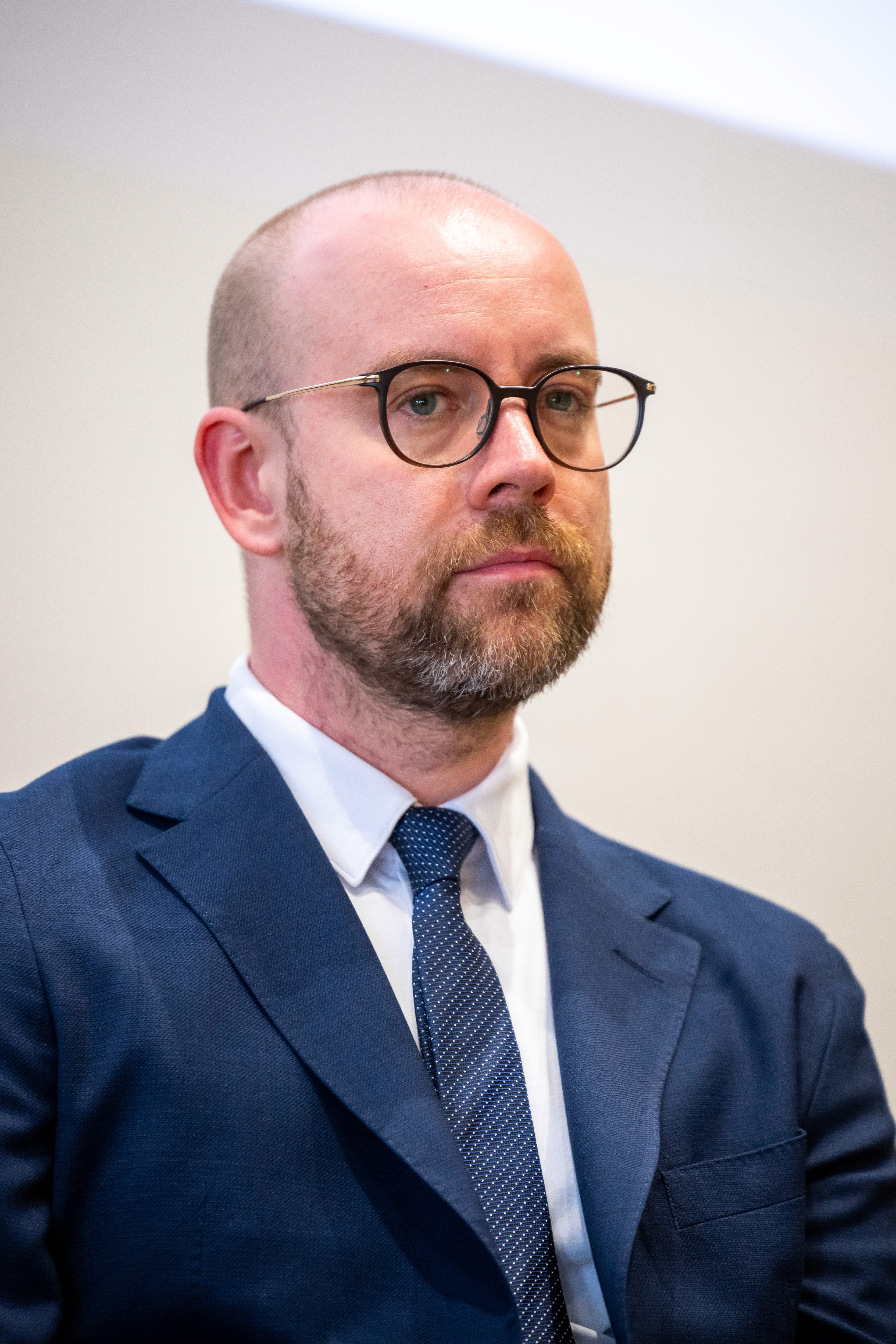
Defence Builder Ecosystem, together with the U.S.-Ukraine Business Council (USUBC), KSE Institute, General Cherry and the Ukrainian Council of the Defence Industry, held Defence Day on 25 June — a side event of the Ukraine Recovery Conference (URC 2026) in Gdańsk. The event brought together more than 200 participants: investors, government representatives, defence companies and industry partners.
The second panel, "From iteration to institution: the next phase of Ukrainian defence technology," focused on how to turn front-line inventions and production scale into a sustainable industry that will not depend on others' solutions.
The second panel featured Viktoriia Honcharuk, CEO of AB3.Tech; Danylo Vakhovskyi, Executive Director of General Cherry; and Jeff Rodrian, Vice President of Internal Innovation and Disruptive Capabilities at AeroVironment (“AV”). The discussion was moderated by Daria Yaniieva, President of Defence Builder Ecosystem.
Daria Yaniieva opened the second panel with the thesis that markets forged by real war hold a structural advantage. There is no room for error here, so pressure replaces market discipline — a solution that doesn't work is eliminated instantly. This engineering culture cannot be reproduced in a lab. Ukraine iterates faster than anyone in the world — the path from idea to front line takes a week where NATO needs months or years — yet it does not yet have an integrated defence industrial base. The question that framed the discussion: how to turn innovation into a sustainable industry with a long-term development trajectory.
Viktoriia Honcharuk opened the conversation from the perspective of those who shape requirements and rely on technology, outlining how to turn cooperation between the military and manufacturers into a sustainable model capable of functioning even if the war stops.
"Every successful company in the Ukrainian defence sector became successful for one reason — it chose to work together with the military: to build the product side by side with soldiers and to improve it on the front line. But the model in which a frontline operator has to respond to hundreds of messages from manufacturers about their drones no longer works, because the military lacks the resources — their primary duty is to carry out their own missions. This is exactly where we come in: AB3.Tech scales up projects born in military labs, because only those who directly carry out combat missions using these tools understand what is needed now and what will be needed tomorrow. This expertise must be preserved even when the war comes to an end," — Viktoriia Honcharuk, CEO of AB3.Tech.
Danylo Vakhovskyi showed this from the manufacturer's side — how a front-line request grows into a product, and why the result can only be sustained over the long term through an ecosystem.
"Our interceptors started with a single request from the 3rd Army Corps — to clear the sky of enemy drones. In spring 2025 we built that solution, and this month we are already intercepting around 44% of aerial targets. To sustain this over the long term, we need to build an ecosystem — with European components, software and engineering. The front line generates real challenges that armies which have never fought simply don't have. For Ukraine's defence industry, this is first and foremost a question of survival — and only after that one of ambition and investment," said Danylo Vakhovskyi, Executive Director of General Cherry.
Jeff Rodrian added the perspective of a global partner — what makes a joint venture successful, and why Ukraine's combat experience is needed by the Western industrial base.
"When you bring two companies together, you look for a partnership with shared values and a mission-oriented mindset. The key question is whether such a combination accelerates the mission outcome. . AV spent over three decades becoming the leading provider of drones to the U.S. DoW, and we have seen Ukrainian companies match that production volume in just a few short years. That's why partnerships that carry the lessons and experiences of the current war into other countries can best serve global security," said Jeff Rodrian, Vice President of Internal Innovation and Disruptive Capabilities at AeroVironment.
In closing, the speakers noted that Ukraine's main export asset is expertise — the knowledge of how to apply autonomous systems and tactics, which cannot be copied. Technology can be replicated, but without combat experience it does not deliver the same result.
This experience, together with the industrial base, should be carried to global markets through partnerships and joint ventures — and, as the participants concluded, this is always a two-way street.